
PRODUCT ENGINEERING · SYSTEM DESIGN
System design that removes uncertainty—and accelerates delivery.
We translate goals into buildable architecture: boundaries, contracts, budgets, and rollout plans engineered for production reality. The output is designed to be executed—interfaces are explicit, risks are surfaced early, and operability is modeled upfront so teams ship faster with fewer reversals.

THE SYSTEM
Architecture that’s executable: boundaries, budgets, and risks made explicit.
System design only matters if it ships. We treat architecture as a delivery accelerator: interface contracts unlock parallel work, budgets define what “good” means, and risks are surfaced early instead of discovered in production.
You get a blueprint that engineers can implement directly—complete with failure modes, rollout strategy, and decision records that preserve context as teams evolve.
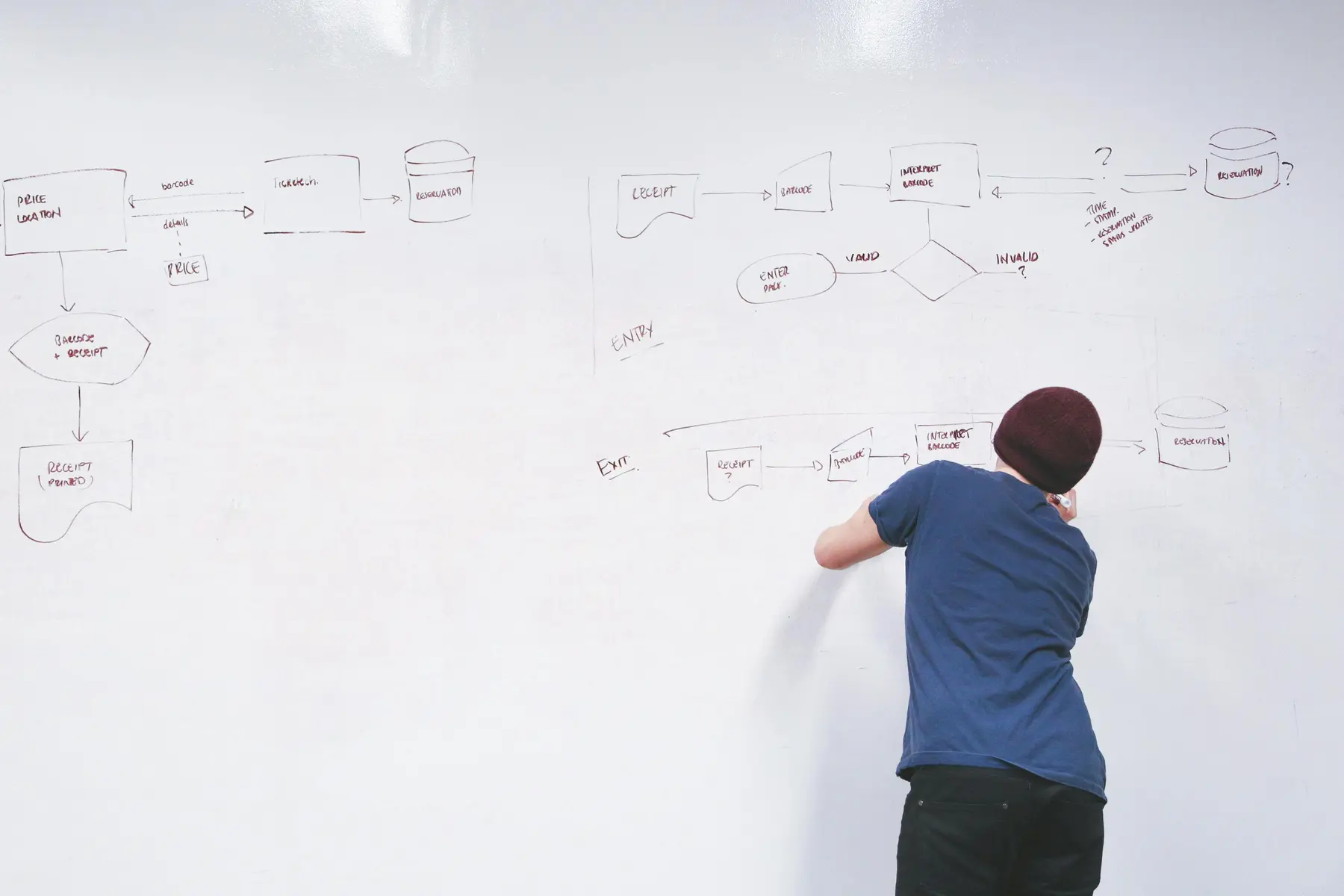
EXECUTION DISCIPLINE
Decisions with tradeoffs, verified by constraints.
We design systems the way they’ll be built and operated: measurable budgets, failure-aware workflows, and staged rollout paths engineered upfront.
01
Boundaries and contracts
We define domain boundaries, APIs, and data ownership so teams can execute in parallel with fewer coordination failures.
- Critical interfaces are explicit (inputs, outputs, errors, invariants).
- Ownership boundaries reduce cross-team coupling and review overhead.
- Compatibility strategy is defined for evolution over time.
02
Risk and failure-mode modeling
We design for incident reality: timeouts, retries, backpressure, and recovery—so the system degrades predictably instead of collapsing.
- Failure modes are documented with mitigations and verification steps.
- Critical dependencies have budgets and fallback behavior.
- Operability is designed, not added after launch.
03
Rollout and verification plan
We define a staged migration and release strategy that keeps delivery moving while reducing reversals.
- Incremental path (strangler/migration-by-slice) when modernization is needed.
- Verification gates tie architecture decisions to measurable outcomes.
- Decision records (ADRs) capture why choices were made.
ARTIFACTS & OUTCOMES
A blueprint engineers can execute without ambiguity.
You receive concrete system artifacts: contracts, architecture diagrams, risk registers, rollout sequencing, and decision records that prevent “architecture theater.”
System architecture blueprint
Boundaries, contracts, data ownership, and evolution strategy—designed for scale and operability.
Risk and rollout plan
Failure modes, rollback paths, verification strategy, and staged release design.
Decision record set (ADRs)
Documented tradeoffs for major choices so future teams can move fast with context.
Operational readiness kit
SLO targets, dashboards, alert policies, and runbooks aligned to user impact.
Modernization plan (if needed)
Incremental migration strategy designed to reduce risk while improving reliability and velocity.
Engineering execution plan
Milestones, sequencing, and integration approach that makes delivery predictable.
OPERATING QUESTIONS
The questions that prevent expensive reversals later.
We address boundaries, tradeoffs, failure modes, rollout sequencing, and how success is verified—before implementation locks in the wrong shape.
EXPLORE MORE
Other services
Adjacent capabilities that often ship alongside this service.